The Tech Weekend Read from Zeren
Five Pieces Worth Your Coffee This Weekend
What the smartest tech research desks published while you were shipping. Curated by the Zeren Software team, with our take on why each one matters if you build software for a living.
Every week, McKinsey, BCG, Stanford, and MIT publish more research than any working CTO has time to read. So we read it for you. Here are the five pieces that earned a hot tech spot this weekend – each with the core insight in two minutes, and a link if you want the full read.
1. The global economy hai chokepoints. Your roadmap probably runs through one.
McKinsey & Company — “Chokepoints: How to respond when the global economy gets squeezed” (July 22, 2026)
Fresh off the Strait of Hormuz disruption – where ship transits collapsed by roughly 95% at the peak – McKinsey’s Geopolitics Practice maps the six types of chokepoints that can squeeze any business: geographic (canals, straits, ports), natural resources, trade logistics, financial systems, technology concentrations (think: 90% of rare-earth separation sitting in one country, or a handful of firms controlling semiconductor lithography), and regulation. Their core management tool is refreshingly simple — three questions: can your exposure be rerouted, replaced, or substituted? Read the full article.
The Zeren lens: Talent is a chokepoint too. Teams concentrated in a single market, a single vendor, or a single time zone carry exactly the same kind of hidden dependency this article describes. Nearshore diversification is the “reroute” option.
2. Everyone talks about AI. Six percent of companies are making money from it.
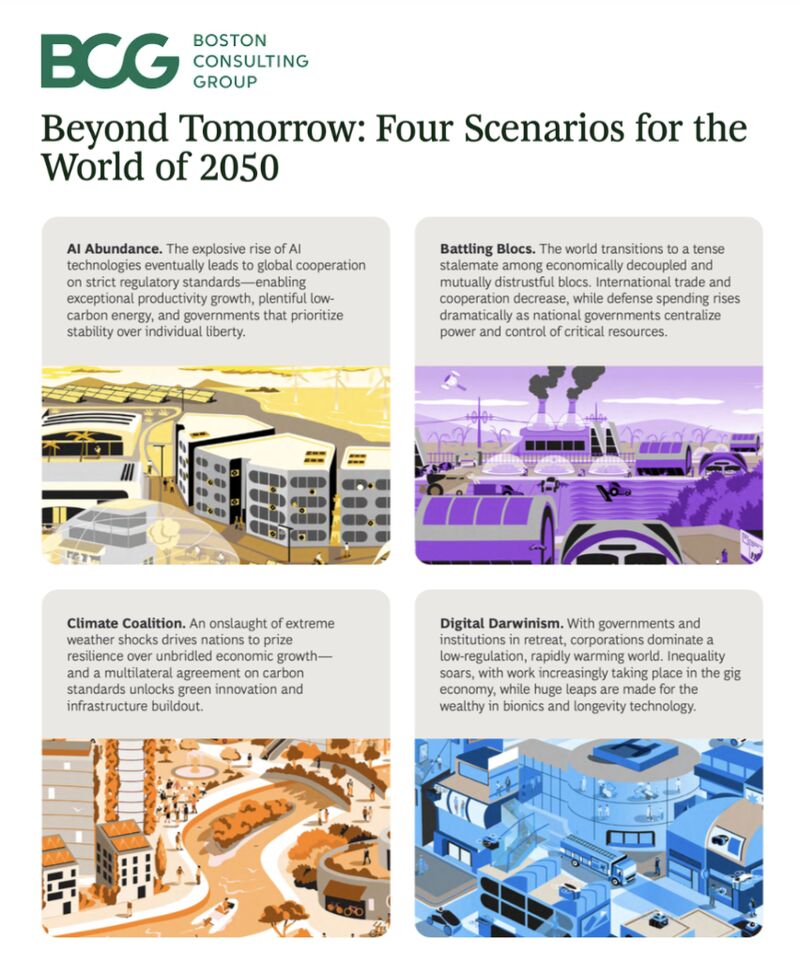
BCG Institute — “AI Talk Is Cheap. Value Creation Is Rare.” (July 9, 2026)
BCG got tired of self-reported AI surveys, so they built an outside-in adoption score and ran it across 600+ US public companies. The result is bracing: while 75% of S&P 500 companies mention AI on earnings calls, only 6% qualify as genuine adoption leaders. The decisive gap isn’t technology (everyone buys the same tools) – it’s talent. At leading companies, 13% of employees have AI-related skills versus 1% at laggards, and the leaders are growing headcount faster, not cutting it. BCG’s shorthand still holds: 10% of the effort is technology, 20% is data, 70% is people and process. Read the full article.
The Zeren lens: This is the strongest data yet for something we tell clients constantly. The moat is a workforce that can spot where AI changes the economics of your business. That’s a capability question.
3. Half of software teams already run AI agents. Almost all expect to ship faster.
MIT Technology Review Insights — “Redefining the future of software engineering” (April 2026)
MIT Technology Review surveyed software leaders on agentic AI and the numbers describe an industry mid-pivot: 51% of teams already use agents in some form, another 45% plan to within a year, and a remarkable 98% expect their pilot-to-production delivery to accelerate. But the expectations are sober — two-thirds anticipate only slight or moderate gains in the next two years, with a bold minority betting on game-changing improvement. The transition, in other words, is universal; the payoff is not. Read the full article.
The Zeren lens: This matches what we see in delivery. Agents compress the routine 60% of engineering work; they do nothing for the hard 40% – architecture, integration, judgment about what not to build. Which means the profile of a valuable engineer is changing faster than most hiring plans.
4. The reality check: AI writes 180% more code. Companies ship 30% more software.
MIT research, via Forbes (June 2026)
MIT researchers found that while AI coding agents have inflated raw code output by 180%, actual shipped software rose only about 30%. The gap is the story: generating code was never the bottleneck. Review, integration, testing, security, deployment – the organizational machinery around the code – is where throughput goes to die. Coding agents have effectively cleared every benchmark that existed two years ago, and it still isn’t enough, because benchmarks don’t measure the last mile. Read the full article.
The Zeren lens: The teams winning right now are re-engineering review and delivery workflows around AI – not stacking more generation on top of an unchanged process.
5. The big picture: AI is spreading faster than the internet did — and governance isn’t keeping up.
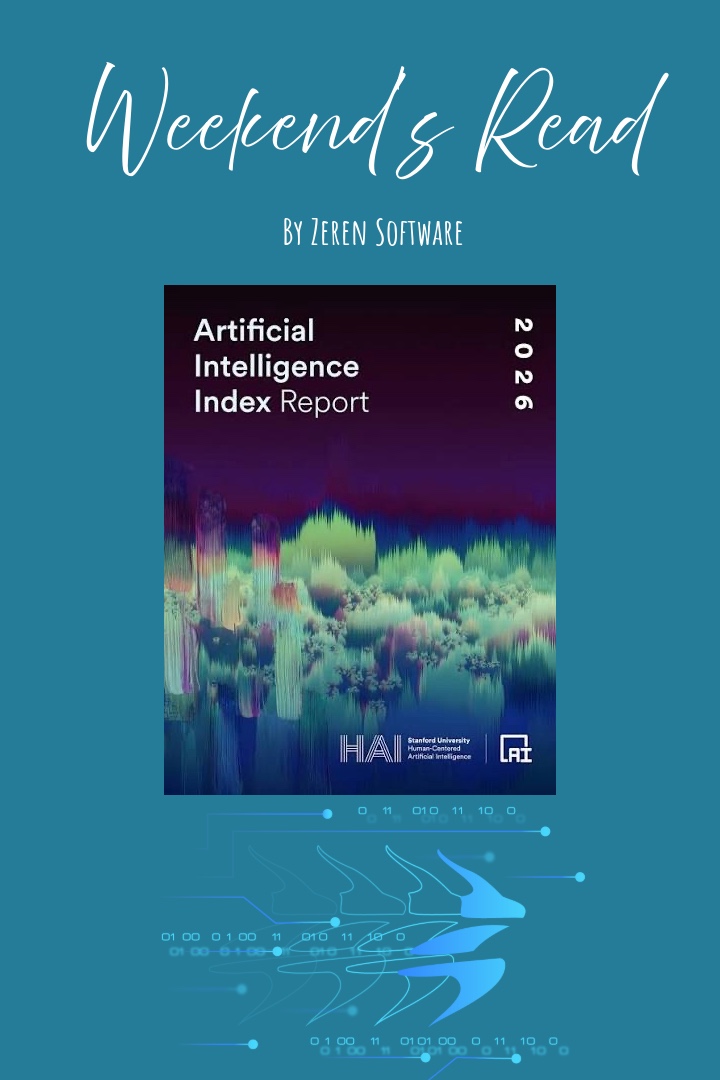
Stanford HAI — The 2026 AI Index Report
If you read one reference document this year, make it Stanford’s AI Index – 400+ pages of independently sourced data, free of vendor spin. The headlines: on SWE-bench Verified, the benchmark where models fix real GitHub issues, scores jumped from 60% to nearly 100% in a single year. Organizational adoption hit 88%. Generative AI reached majority population-level adoption within three years – faster than the PC or the internet. Meanwhile the US–China frontier gap has effectively closed (the lead was 2.7% as of March), over 90% of notable models now come from industry rather than academia, and Stanford’s own framing of the year is blunt: capability is accelerating faster than society’s ability to govern, evaluate, or trust it. Read the full article.
The Zeren lens: For European companies, the governance gap isn’t abstract – it’s the EU AI Act arriving while the technology mutates quarterly. The winners in our region will be the ones who treat compliance-ready AI engineering as a feature, not a tax.
Read side by side, these five pieces make one argument from five directions: capability is no longer the constraint – absorption is. The models can code. The tools are on the shelf. The chokepoint, in every one of these studies, is organizational: the talent to deploy AI into your specific economics (BCG), the workflows that turn generated code into shipped product (MIT), the resilience planning that turns disruption into advantage (McKinsey), and the governance to do all of it responsibly (Stanford).
That’s the work. It’s also, not coincidentally, the work we do.
Enjoyed this? The Weekend Read will be back. Meanwhile, if any of these hits close to home – from AI-era engineering capacity to building teams that absorb new technology instead of piloting it forever – talk to us.
Sources: McKinsey & Company (July 2026), BCG Institute (July 2026), MIT Technology Review Insights (April 2026), Forbes/MIT (June 2026), Stanford Institute for Human-Centered AI (2026). All insights paraphrased; follow the links for the original research.